
5 tips for convincing body language in a job interview
In a job interview, it's not just what you say that counts, but also how you come across. Your body language can convey self-confidence, interest or professionalism - often unconsciously. With the right signals, you can significantly increase your chances of getting the job.
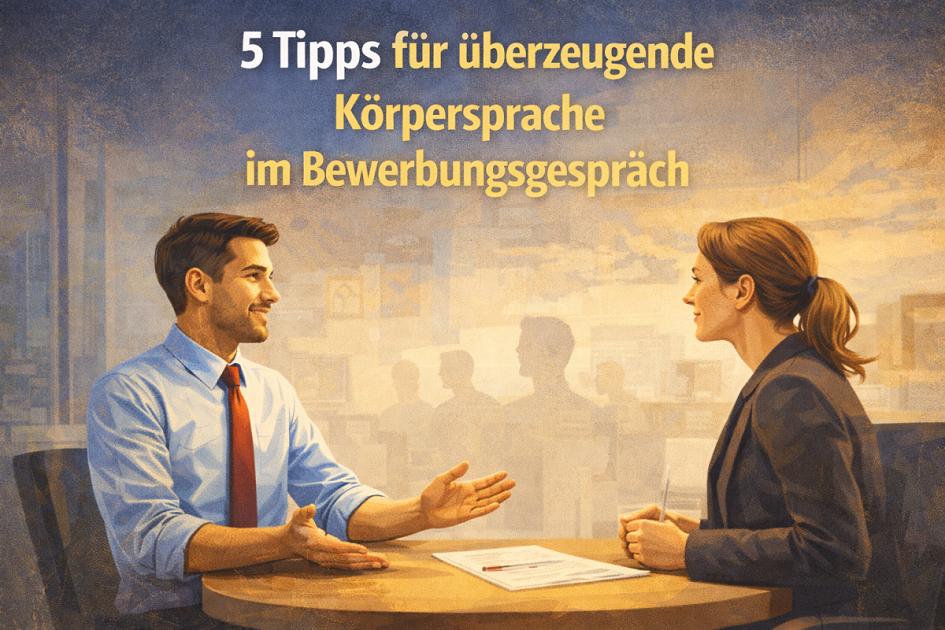
Introduction:
In theJob interviewIt's not just what you say that counts, but also how you come across. Your body language can convey self-confidence, interest or professionalism - often unconsciously. With the right signals, you can significantly increase your chances of getting the job.
The 3 most important tips on body language at a glance
Make sure you have an open attitude:Crossed arms or a turned away body can have a repellent effect.
Maintain eye contact:In this way you signalise interest and self-confidence.
Use targeted gestures:Emphasise your statements with calm, controlled movements.
1. the first impression starts with your attitude
Even before you say a word, your body language reveals a lot about you. An upright posture shows self-confidence and presence. Make sure you stand or sit up straight. Keep your shoulders slightly back and do not lower your head.
A firm handshake when greeting someone rounds off the first impression - but don't overdo it. In Switzerland, friendly, respectful reserve is important
2. open your eyes: Your eye contact creates trust
Appropriate eye contact conveys attention and interest. Avoid letting your gaze wander constantly or looking at the floor. This will make you appear insecure.
Expert tip: Find the right balance.
By looking at the person you are talking to, you are building a relationship. However, you should not stare at the other person. If you manage to alternate naturally between eye contact and short pauses, you will come across as authentic and relaxed.
3. open body language instead of a defensive stance
Crossed arms, slumped shoulders or an upper body turned to one side send negative signals. However, your posture should convey openness.
It is therefore better to put your arms down loosely or use them consciously. If you maintain an open posture, your counterpart will perceive you as interested, committed and ready for dialogue.
4. how to use gestures in a targeted manner in a job interview
Hand movements can emphasise your statements and help you to appear more lively. Your gestures should always remain calm and controlled.
Movements that are too hectic or seem uncoordinated are distracting and can betray nervousness. Use your hands consciously to emphasise important points.
5 From friendly to serious: consciously control your facial expressions
Your facial expressions play a central role. A friendly smile is likeable and creates a positive atmosphere.
Make sure that your facial expressions match your statements. A serious facial expression on positive topics can be irritating - as can an inappropriate smile. Authenticity is crucial here.
Conclusion: Your body language sends important signals
Convincing body language can make all the difference in a job interview. If you consciously pay attention to your posture, eye contact and gestures, you will come across as competent and confident.
With a little practice, you will be able to use your non-verbal signals in a targeted manner - and this is exactly what is often remembered in the long term.
FAQ: Frequently asked questions about body language in job interviews
1. how important is body language in a job interview?
Body language is often just as important as your professional qualifications. Recruiters look at non-verbal signals to assess your personality, self-confidence and credibility. A harmonious overall impression can significantly improve your chances.
2 What do I do with my hands during the interview?
Many applicants are unsure what to do with their hands. It is best to place them loosely on the table or in your lap. Use your hands occasionally to support your statements. Avoid hectic movements or playing with objects. This signals nervousness.
3. how much eye contact is appropriate during a conversation?
Balanced eye contact appears attentive and respectful. Maintain regular eye contact without staring at the other person. Brief pauses between glances are completely natural and help to make the conversation more relaxed.
4. how can I hide nervousness in my body language?
A certain amount of nervousness is normal. It is important to consciously breathe calmly, speak slowly and clearly and concentrate on a stable sitting posture. Small rituals such as a brief moment of concentration before the interview can help you to appear calmer.
5. what body language should I avoid in a job interview?
Closed postures such as crossed arms, a lowered gaze or constant fidgeting can have a negative effect. The same applies to a handshake that is too weak or too strong. Your aim should be to present an open, calm and authentic appearance. In this way, you signalise interest and professionalism.